


The project is funded by the European Union, with the aim of a just digital, economic and environmental transition of rural areas in the European Union. Main activities: data collection, informing rural residents and encouraging their active participation in making decisions on rural transition and their implementation. The project is being implemented in eight European Union countries, with testing of certain scientific approaches in rural areas themselves.
The webinar was attended by 80 participants.
The event was attended by the project team leader, Prof. Dr. Mirjana Radovanović, in order to gain new knowledge, network and exchange experiences. During the Discussion, the participants were introduced to the project being implemented in Serbia.


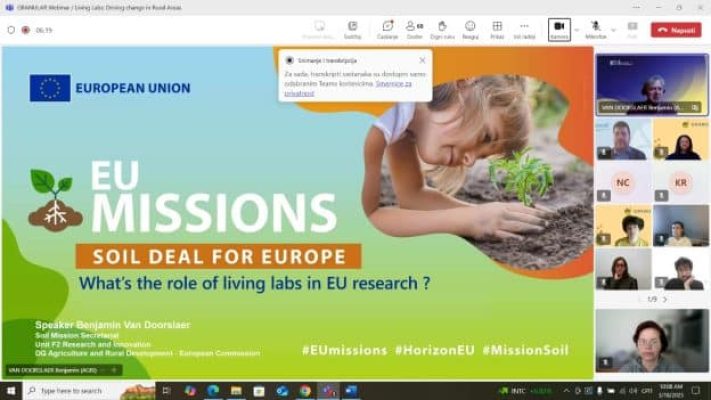
The first speaker was Benjamin Van Doorslaer, representative of the European Commission, who stressed the importance of living laboratories for rural development. They bridge the gap between science and rural areas, as rural development is considered one of the most important long-term goals of the European Union.

Afterwards, Agnieszka Kurdys-Kujawska from Poland presented the project methodology, with an emphasis on the experience in implementing the project in rural areas in the West Pomerania region, Poland. She pointed out the demographic, economic and educational problems that this region faces. During the project, the possibilities of implementing sustainable agriculture and rural tourism were tested, through surveys of the population and local governments.


Project participant Kimberly Wevers shared her experiences in implementing the project in selected rural areas in the Netherlands with the event participants. Regular monthly meetings were held with the residents and it turned out that regular contact is extremely important.
During the project, various data were collected on the needs of the residents of rural areas and compared with the views of local government representatives, concluding that there are differences.


In the Discussion section, participants discussed their experiences in rural areas, emphasizing the need for residents to be continuously involved in the decision-making process, to meet regularly and discuss important issues.