



The topic of the workshop is the European Accessibility Act (E.A.A.), as a document that will be implemented in the EU during 2025. Given the importance of adapting to the needs of different categories of the population and understanding their specific requirements, all with the aim of ensuring maximum social justice and equality, the provisions of this document should be binding, on a daily basis, from communication to creating conditions for meeting the economic and market needs of all categories of the population, and for environments and communities located outside the borders of the EU. Considering the work of employees at the University with a diverse structure of student groups, scientific, research and professional work in the field, with different and wide groups of the population, with which the research work on the project Circular Economy as a New Model for the Development of Rural Environments in the Republic of Serbia: State, Challenges and Perspectives (EDUCIRC 2022), but also on the proposals of some other projects, partly compatible, the workshop was understood as a source of significant explanations and interpretations of the concepts and essence of the entire context of “accessibility”, but also as a significant opportunity to establish contacts with a company that works seriously in this field, with the aim of positioning itself in some future and more extensive work when this document is in question.

Picture 1. Accessibility Act Workshop, opening remarks by moderator Janet P. Poot
Participants
JPCorporate International BV:
Janet P. Poot, Caroline Allertz: The company was founded in Netherland, more than 20 years ago, with the aim of supporting companies and organizations in their development and improvement of their work, in accordance with current requirements, challenges and circumstances, and in meeting the requirements of EU legislation. The topic of this workshop is the European Accessibility Act (E.A.A.), which should be implemented in Europe by 2025, and which, specifically, means the accessibility of goods, services and products to all categories of the population, primarily to vulnerable categories, and then the adaptation and accessibility of all of the above to women, youth, rural populations, etc. The company offers its services through cooperation with the University and the Chamber of Commerce of Vojvodina, based on professional training of employees for the implementation of this policy, communication with the aforementioned groups, adaptation of its programs to the specific requirements of the groups and on the basis of raising awareness and a responsible attitude towards the Act.
Educons University
The project team was represented by: Assoc.Prof. Andrea Andrejević Panić, Assoc.Prof. Simonida Vukadinović, Prof. Olivera Nikolić, Asst. Prof. Zoran Brljak: The University notes that there is a need to train employees for specific communication with students and facilitate access to all necessary resources and capacities of the University, taking into account the diverse structure of student groups, and in order to improve the quality of studying and life at the University, as well as train employees for communication with other target groups and understanding their specific needs, taking into account, in addition to educational, scientific research work of employees, in the field, in rural areas, such as the current EDUCIRS 2022 project, with people with disabilities, such as the project proposal within the Danube Region group and other atypical environments. Assoc.Prof. Simonida Vukadinović stated that, in the implementation of the EDUCIRS 2022 project, there was a need to adapt to different groups of the rural population: young people, women, older and younger people with disabilities and the need to understand their demands and needs, and, in this sense, there is a clear need to work on raising the competencies of employees in everyday work. Cooperation was proposed within the framework of the training program for agricultural advisors, who are in daily work in the field and in direct contact with different groups of producers. In general, the University supports cooperation with the company, fully aware that, at some point, the implementation of this document will be an obligation, and before that, the adaptation of work and the environment to some of its segments, a comparative advantage compared to other similar institutions.
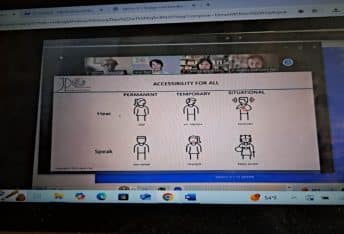
Picture 2. Assoc.Prof. Andrea Andrejević Panić and Prof. Olivera Nikolić as part of the project team
Chamber of Commerce of AP Vojvodina
Mladen Petković: The Chamber of Commerce of Vojvodina has considered the content of the document and is ready, when the conditions for this arise, to start more concrete work on it in order to meet the EU’s requirements
Institute for Applied Science in Agriculture Belgrade
Boris Berisavljević shares the thoughts of his colleagues and hopes that the stakeholders gathered at this workshop will be part of the working group for the introduction of this Act in this region and will be “pioneers” in its implementation.